Ember & Grain · Field Notes · Wood · Nº 07
Maple Wood
the sugar tree
Franklin County, Vermont. Sugarhouse steam, Abenaki red water, and the sweet smoke of the north woods.
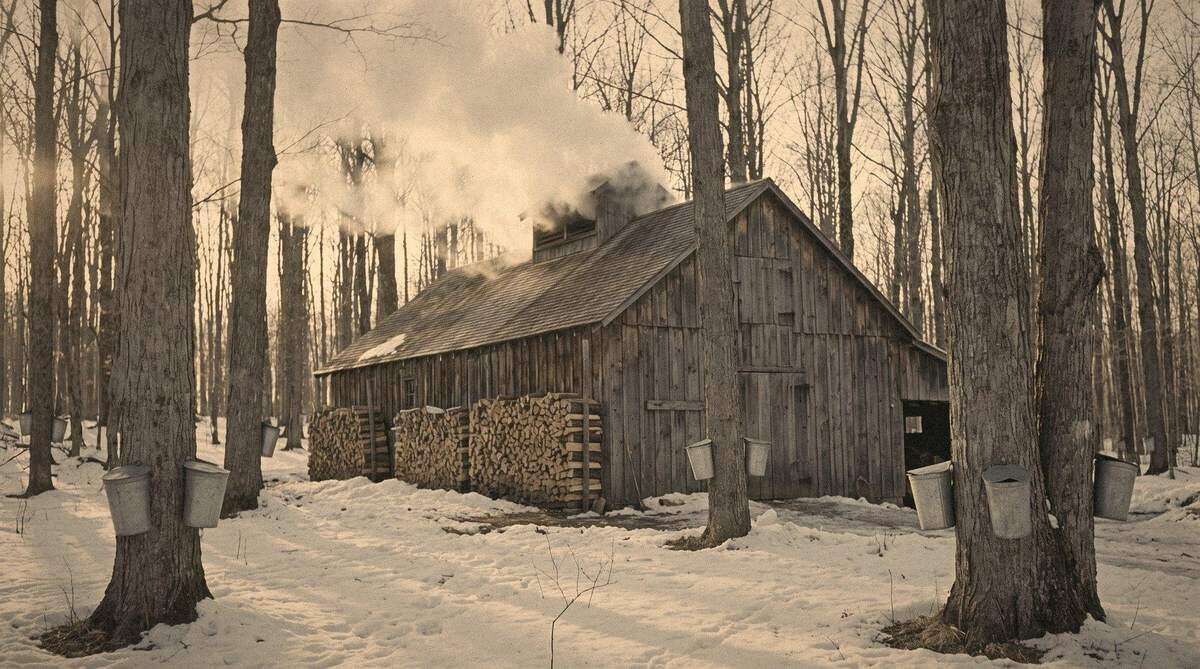
Every spring, when the nights still freeze and the days begin to thaw, the sap runs in the maples. The Abenaki called this season Sogalikas, the time of maple sugar making, and boiled sap long before Europeans came. In 1722 a French missionary, Sébastien Rasle, wrote down how they did it. Today Vermont makes more maple syrup than any other state.
Sap in March, syrup by April, smoke all winter.
On the salt
In the Atlas, Maple Wood is paired with Blackwater Salt.
Field notes
| Also known as | Sugar · hard · rock maple |
| Tree | Acer saccharum, soapberry family |
| Native to | Eastern Canada and US |
| Home | St. Albans, Vt. · 44°49′ N |
| State tree | Vermont, since 1949 |
| Smoke | Mild, sweet · 2 of 5 |
| On the salt | Blackwater Salt · Vol. I, Nº 14 |
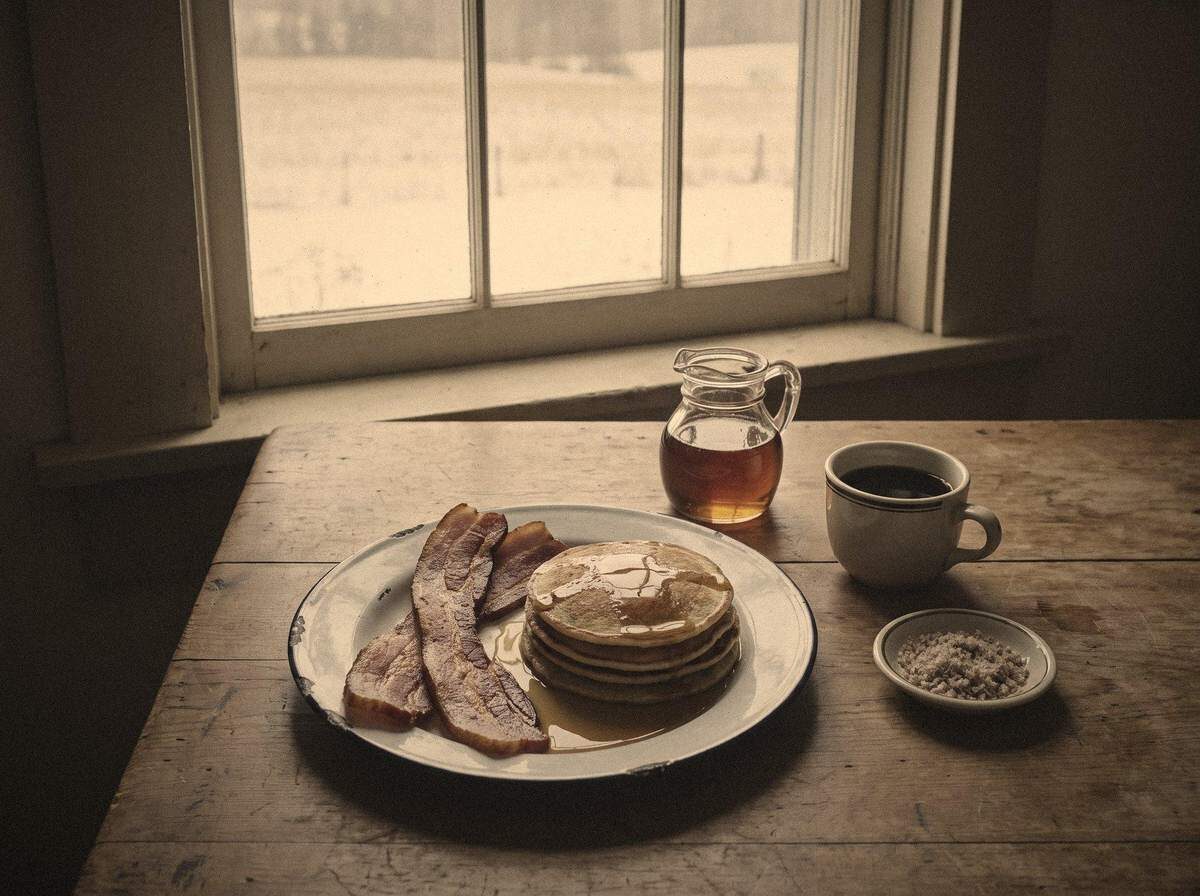
Continue in The Origins Atlas
The rest of this chapter lives in the book: the full story of the place, how the wood burns, the people who keep the tradition, and the hand-drawn map.
- The Place · the northern lake
- The Sugarhouse · sap and steam
- The Tap
- The Taste · mild and sweet
Sources: Abenaki Tribe; VermontBiz; Seven Days, “Hog Wild”; Wikipedia, “Vermont Maple Festival,” “St. Albans, Vermont.” Imagery is illustrative and AI-generated.