
Ember & Grain · Field Notes · Wood · Nº 18
Chestnut Wood
the bread tree
The Castagniccia, Corsica. Genoese decrees, a hero’s birthplace, and the smoke of the farmhouse hearth.
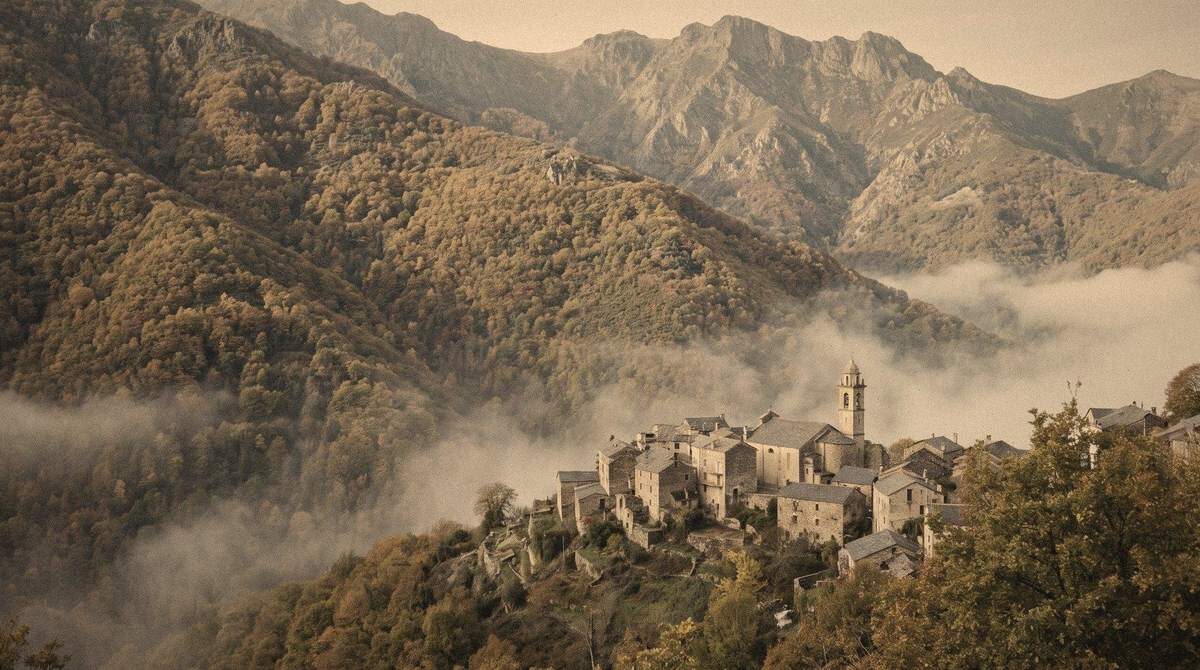
In 1548 the Genoese governor of Corsica ordered every landowner to plant, each year, a chestnut, a mulberry, an olive and a fig, or pay a fine for every tree missing. In 1619 a new decree asked for ten chestnuts a year. The hills of the northeast filled with them, and the region took the tree’s name: the Castagniccia, the land of chestnuts.
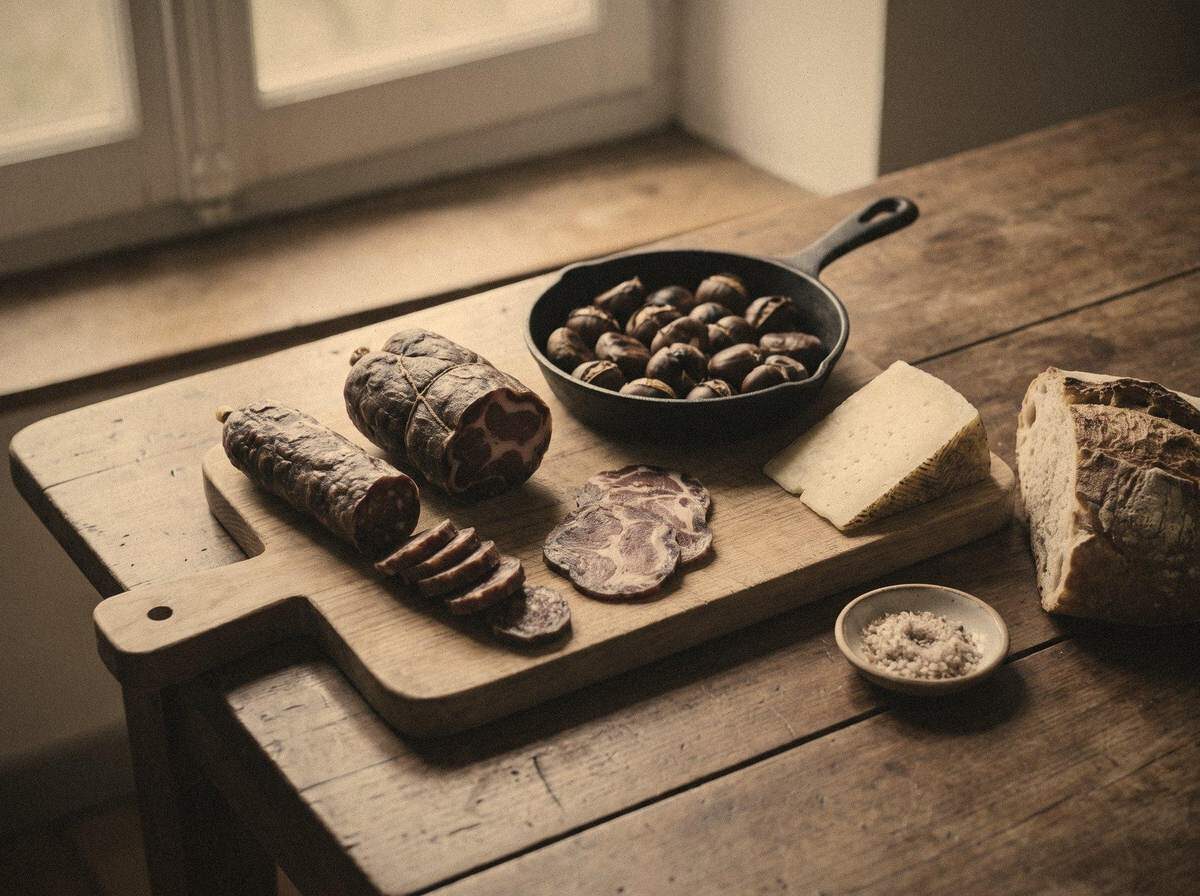
Bread from the tree, smoke from the hearth.
On the salt
In the Atlas, Chestnut Wood is paired with Gros Sel de Guérande.
Field notes
| Also known as | Sweet chestnut · castagnu |
| Tree | Castanea sativa, beech family |
| Planted | By Genoese decree, 1548 |
| Home | Morosaglia · 42°26′ N |
| Protected | Prisuttu, coppa, lonzu |
| Smoke | Warm, firm, tannic · 3 of 5 |
| On the salt | Gros Sel de Guérande · Vol. I, Nº 04 |
Continue in The Origins Atlas
The rest of this chapter lives in the book: the full story of the place, how the wood burns, the people who keep the tradition, and the hand-drawn map.
- The Place · the land of chestnuts
- The Hearth · the fucone
- The Taste · warm and firm
Sources: Wikipedia, “Cuisine of Corsica,” “Morosaglia”; French Ministry of Agriculture (2018); EU Reg. 581/2014; napoleon.org. Imagery is illustrative and AI-generated.