
Ember & Grain · Field Notes · Wood · Nº 06
Cherry Wood
the blossom and the bark
Kakunodate, Akita. Weeping cherries, a samurai craft, and the smoke of the farmhouse hearth.
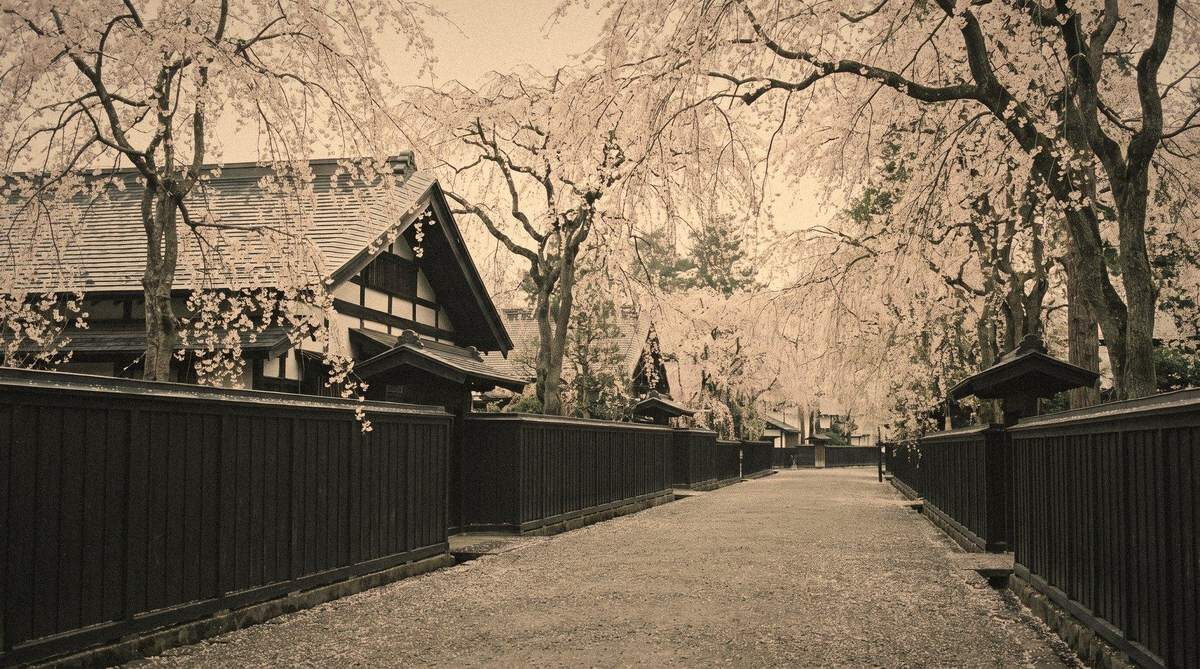
Kakunodate was laid out as a castle town in 1620. Its samurai houses still stand behind black wooden fences, and over them hang the weeping cherries. Tradition says the first three saplings came from Kyoto in 1664, in the dowry of a bride. Today some four hundred weeping cherries grow in the town, and 162 of them are protected as national Natural Monuments.
Blossom in spring, bark for the craft, wood for the fire.
On the salt
In the Atlas, Cherry Wood is paired with Pink Himalayan.
Field notes
| Also known as | Sakura · yamazakura |
| Tree | Prunus species, rose family |
| Native to | Japan and East Asia |
| Home | Kakunodate · 39°36′ N |
| Craft | Kabazaiku, since the 1780s |
| Smoke | Mild, sweet, fruity · 2 of 5 |
| On the salt | Pink Himalayan · Vol. I, Nº 08 |
Continue in The Origins Atlas
The rest of this chapter lives in the book: the full story of the place, how the wood burns, the people who keep the tradition, and the hand-drawn map.
- The Place · snow country
- The Fire · bark, wood, smoke
- The Taste · rich and fruity
Sources: Semboku City; nippon.com; Japan Ministry of Agriculture (MAFF), GI specification for iburigakko; Wikipedia, “Kakunodate.” Imagery is illustrative and AI-generated.