
Ember & Grain · Field Notes · Wood · Nº 01
Hickory Wood
the ham-house wood
Smithfield, Virginia. A river port, a dry-cured ham, and the slow smoke of the eastern hardwood forest.
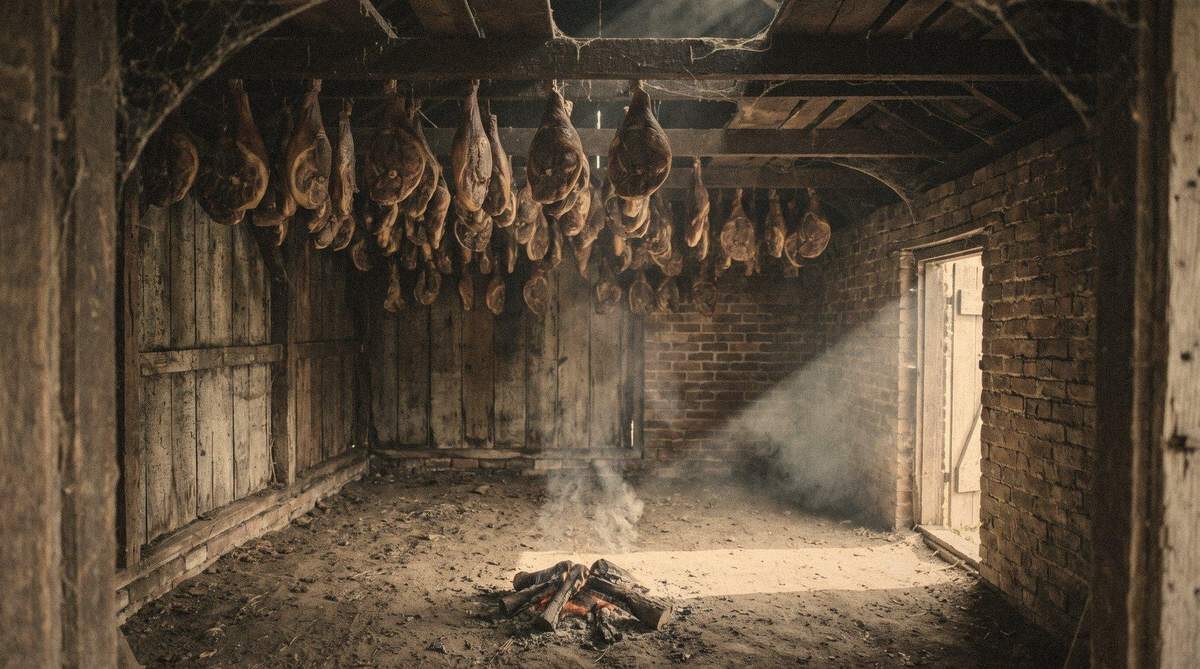
Smithfield sits on the Pagan River, a short run from the James. Arthur Smith laid the town out as a port in 1752. In 1779 a merchant named Mallory Todd shipped hams from here to the island of St. Eustatius in the West Indies, and his invoice is the oldest record of the trade. For more than two centuries the town cured and smoked its hams on the same few streets.
Forty days of smoke, and a ham written into law.
On the salt
In the Atlas, Hickory Wood is paired with Pink Himalayan.
Hickory Wood · Field notes
| Also known as | Shagbark · shellbark |
| Tree | Carya ovata, walnut family |
| Native to | Eastern North America |
| Home | Smithfield, Va. · 36°58′ N |
| Smoke | Strong, savory · 4 of 5 |
| Best on | Pork, ham, bacon, ribs |
| On the salt | Pink Himalayan · Vol. I, Nº 08 |

Continue in The Origins Atlas
The rest of this chapter lives in the book: the full story of the place, how the wood burns, the people who keep the tradition, and the hand-drawn map.
- The Place · the ham town
- The Smokehouse · salt, smoke, time
- The Taste · bold and savory
Sources: Historical Marker Database, “Todd House”; Isle of Wight County Museum; Wikipedia, “Smithfield ham”; Virginia Tech Dendrology. Imagery is illustrative and AI-generated.