
Ember & Grain · Field Notes · Wood · Nº 09
Kiawe Wood
the tree from one seed
The leeward lowlands of Hawaiʻi. A mesquite from Peru, a priest’s seed, and the hardest fire in the islands.
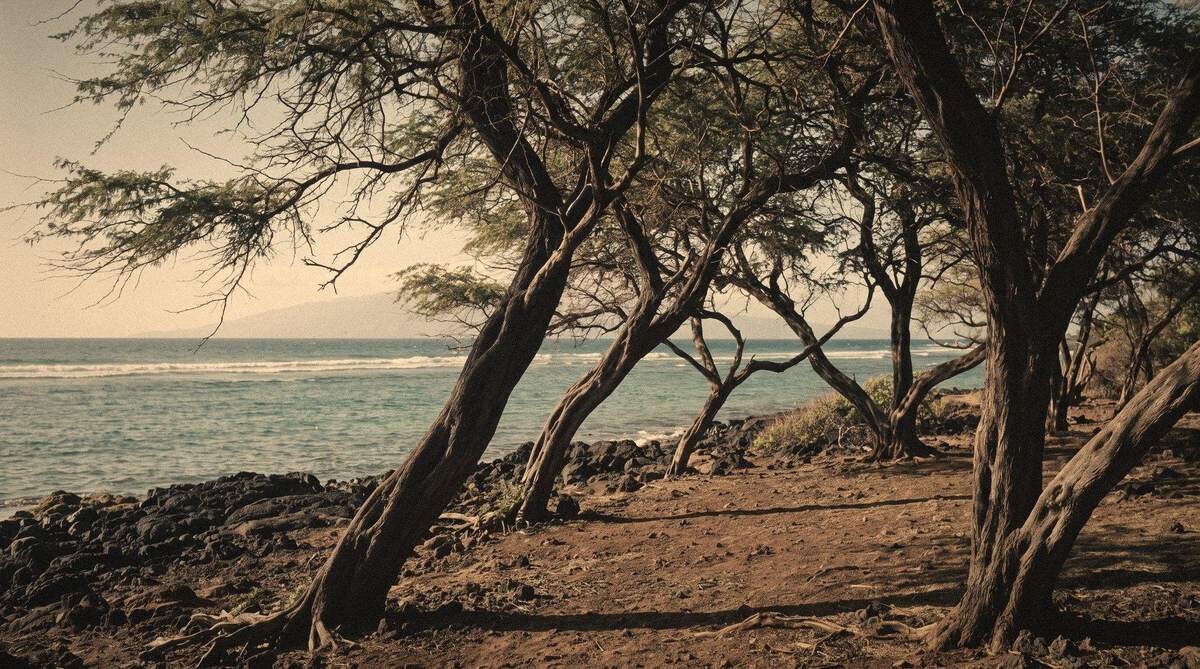
In 1828 a French priest named Alexis Bachelot planted a seed on the grounds of the Catholic Mission in Honolulu. The seed came from a tree in the royal garden in Paris, and that tree came from the dry coast of Peru. Honolulu then was nearly treeless. By 1840 the seed’s children shaded the town. Today kiawe is the most common tree of the dry lowlands on every island.
One seed, one priest, and a fire the islands still cook on.
On the salt
In the Atlas, Kiawe Wood is paired with Black Lava, Molokaʻi.
Kiawe Wood · Field notes
| Also known as | Hawaiian mesquite · algarroba |
| Tree | Prosopis pallida, pea family |
| Native to | Dry coasts of Ecuador, Peru, Chile |
| Arrived | 1828 · Honolulu · 21°18′ N |
| Smoke | Bold, sharp, earthy · 4–5 of 5 |
| Best on | Beef, pork, chicken, ahi |
| On the salt | Black Lava, Molokaʻi · Vol. I, Nº 02 |

Continue in The Origins Atlas
The rest of this chapter lives in the book: the full story of the place, how the wood burns, the people who keep the tradition, and the hand-drawn map.
- The Place · the dry side
- The Fire · heavy wood, hot coals
- The Taste · bold and earthy
Sources: Little & Skolmen, Common Forest Trees of Hawaii (USDA, 1989), via University of Hawaiʻi CTAHR; Wikipedia, “Huli-huli chicken.” Imagery is illustrative and AI-generated.